
Door To Door Marketing
Door to Door Marketing And Face to Face Marketing
Nothing beats the reality that one gets when you can interact with potential clients face to face physically moving from door to door within a community or household to household, face to face field marketing is also called personal selling or door to door marketing, customers are met directly in order to sell their products, using this method of field marketing we rely on our skills and persuasive abilities. During the period where we get to interact with the client face to face we get more chance to pass across edible information which would be useful to all our customers at that time and it’s also an opportunity for us to get feedback and to gauge your opinion about our business.
Door to Door marketing and Face to Face marketing is a more effective traditional form of marketing, it’s one of the oldest forms of marketing and we use promotion as a means to drive sales to your company or business. There’s nothing more exhilarating than getting to interact with potential customers through face to face marketing and over the years customers are aware and very receptive to this marketing approach through supermarkets and public business places.
The benefit of this type of field marketing is that it can be done on a low budget, it is very cost effective and reaches a larger number of people per within a very short duration, in this short period of time where you have just a few minutes to convince the customers to take interest in your business, just a few minutes to build personal relations through five stages. By attention, interest, desire, conviction and action. And what else do you benefit by using face to face marketing service?

You would be selling your zeal, emotions and passion
We offer a wide range of marketing services to business of different functions in India, startup businesses are not left out and we cut across all methods of marketing services, with Door to Door marketing service we assist you our clients with reaching your target customers, our services which extends to all parts of India and we target customers who are ready to change their local services to yours. We can assure you that our face to face methods would be conducted with high regards to personal safety and very good competence.

It gives you the chance to build a certain level of confidence and trust with the customers, you get to break down communication barrier of communication and it gives you the opportunity to show clarity and answer any questions on the mind of the customers.
While many think that door to door marketing is getting neglected in this very era it still yields more results especially during startups of businesses, think about it. Other forms of marketing get lower results, emails get spammed, adverts go unnoticed and phone calls go unanswered so why not just take your business directly to them. It’s only through personal interaction that you get the chance to connect with the customer, you would be selling more than a product.
Benefits of Door-To-Door Sales

Allow customers to see products
Provide a personal approach
Human Connections
Two-way Communication
Earn Trust and Credibility
Identifying potential customers
Demonstrate Complicated Products or Services
Build a customer base
Develop relationships
Distinguish yourself from the competition
Ensure people see your offerings
Generate demand and Generating leads
Measure success
Support market research
Use an adaptable approach
Use time effectively

Selling door-to-door involves several stages:
Prospecting :-a process of searching for new potential customers;
Qualifying :- identifying the customer’s needs that match your product/service features;
Pitching :- making an offer and describing its benefits in detail, actually proving that your product solves the customer’s problem;
Closing :- asking the customer to buy the product or order a service;
Follow-up :-establishing contact with the customer to make sure that he has received the order and any needed support, and that they are satisfied.
Door-to-door marketing is a canvassing technique that is generally used for sales, marketing, advertising, or campaigning, in which the person or persons walk from the door of one house to the door of another, trying to sell or advertise a product or service to the general public or gather information. People who use this sales approach are often called traveling salesmen, or the archaic name drummer, to “drum up” business. This technique is also sometimes called direct sales. A variant of this involves cold calling first, when another sales representative attempts to gain agreement that a salesperson should visit.

Hire and Train Door-to-Door Marketing Team
With the realization of telephone “Do Not Call” lists it is becoming increasingly more difficult to connect with consumers and business people. An emerging trend is the deployment of very professional, highly skilled door-to-door canvassers to drive product sales and brand awareness.
Coordinating, training and motivating these teams to produce results are at the very core of Fulcrum’s proven capabilities. Fulcrum has the knowledge and experience required to implement these programs, such as best days and times to canvass, who will sell the most product; male, female, young or mature and what geographics and demographics respond best to door-to-door marketing. Put Fulcrum’s experience to work for you and avoid the costly mistakes of trying to manage these programs in-house.

If you’re in charge of hiring people, that typically means that you’ve found success in Door To Door Marketing yourself. You know what it takes to be great, but now you’re stuck with an entirely new problem. How do you find others who will be just as good (if not better) and will stick around and grow into important influencers invested in the long term growth of the company? A great D2D sales company is a great recruiting company. So what does that greatness look like?
First off, you need to realize that you’re not going to hire a superstar every time. If you think you have found one, be careful. It’s not hard for someone to seem golden during one interview and you don’t want to be fooled.
Even if you think the candidate does have a lot of great experience working in the field for other companies, you have to realize that success doesn’t always translate. What worked for them at previous companies probably won’t work as well for you. In fact, their success will probably make them stubborn; after all, what reason do they have to follow your approach when they’ve figured out their own?
It’s also possible that the rep’s previous company might have had much better-developed training and selling systems than you do, and that system was the key reason they killed it. If you’re not developing a competitive system, what does that communicate about your company? The more dialed-in you are about a rep’s success, the more likely you are to attract and keep strong performers.
Our Marketing Services for Customer Acquisition
Whether you’re looking to build awareness, drive calls or convert leads to customers, our 10+ combined years of direct marketing expertise will help you get better results. Our best direct marketing campaigns use data modeling, data insights, compelling offers and high-quality fieldwork, telemarketing and sales team to help increase response for your customer acquisition campaigns. We deliver the results.
Get in touch with us
Let us help you plan and execute a great marketing strategy.
Call Us : 8484099961
Email:- info@fulcrumresources.co.in
Send Us Your Requirements
Contact Form
PUNE
PUNE
Pune, is the second largest city in the state of Maharashtra and the seventh most populous city in India, with an estimated population of 7.4 million as of 2020.[23] It has been ranked as “the most livable city in India” several times.[24] Along with the municipal corporation limits of PCMC and the three cantonment towns of Camp, Khadki and Dehu Road, Pune forms the urban core of the eponymous Pune Metropolitan Region (PMR).[25]
According to the 2011 census the urban area had a combined population of 5.05 million whilst the population of the metropolitan region was estimated at 7.4 million.[9] Situated 560 metres (1,837 feet) above sea level on the Deccan plateau on the right bank of the Mutha river,[26] Pune is also the administrative headquarters of its namesake district.The largest city of Maharashtra, Pune contributes a GDP(PPP) of $78 billion.
HISTORY

The circular Nandi mandapa at the Pataleshwar cave temple built in the Rashtrakuta era
Pune was part of the Jagir (fiefdom) granted to Maloji Bhosale in 1599 for his services to the Nizamshahi (Ahmadnagar Sultanate).[39] Pune was ruled by the Ahmadnagar Sultanate until it was annexed by the Mughals in the 17th century. Maloji Bhosale’s grandson, Chhatrapati Shivaji Maharaj, the founder of the Maratha Empire, was born at the fort of Shivneri, about 90 km from Pune.[40] It changed hands several times between the Mughals and the Marathas in the period 1680 to 1705.
After the destruction of the town in raids by the Adil Shahi dynasty in 1630 and again between 1636 and 1647, Dadoji Konddeo, the successor to Dhadphale, oversaw the reconstruction of the town. He stabilised the revenue collection and administrative systems of the areas around Pune and the neighbouring Maval region. He also developed effective methods to manage disputes and to enforce law and order.[41] The Lal Mahal was commissioned in 1631 and construction was completed in 1640 AD.
GEOGRAPHY
Pune is situated at approximately 18° 32″ north latitude and 73° 51″ east longitude. The city’s total area is 15.642 sq. km.[80] By road Pune is 1,173 km (729 mi) south of Delhi, 734 km (456 mi) north of Bangalore, 570 km (350 mi) north-west of Hyderabad and 149 km (93 mi) south-east of Mumbai.
Pune lies on the western margin of the Deccan plateau, at an altitude of 560 m (1,840 ft) above sea level. It is on the leeward side of the Sahyadri mountain range, which forms a barrier from the Arabian Sea. It is a hilly city, with Vetal Hill rising to 800 m (2,600 ft) above sea level. The Sinhagad fort is at an altitude of 1,300 metres (4,300 feet).
The old city of Pune is at the confluence of the Mula and Mutha rivers. The Pavana, a tributary of Mula river and Indrayani river, a tributary of the Bhima river, traverse the northwest suburbs of Pune.

Laxmi road, the main shopping street in inner city Pune
ECONOMY

The second largest city of Maharashtra, Pune contributes a GDP(PPP) of $48 billion.[22] Pune has the fifth largest metropolitan economy and the sixth highest per capita income in the country.[129][130] The key sectors of the local economy are education, manufacturing and information technology (IT). Pune has historically been known as a center for higher education and has been referred to as the educational capital of India. In 2016, it was reported that nearly 500,000 students from across India and abroad study in Pune at nine universities and more than a hundred educational institutes.[131][132] It is known as Industrial powerhouse of Maharashtra. The city is widely known for its IT and manufacturing industries. Industrial areas are developed in Pimpri-Chinchwad, Chakan, Indapur, Ranjangaon etc.
It serves as headuqarters to Kirloskar Group, Bajaj Auto, Serum Institute of India, Tata BlueScope Steel, Bharat Forge, Kalyani Group, Tata Steel Processing and Distribution etc. Public sector undertakings such as Hindustan Antibiotics, Maharashtra State Agri and Rural Tourism Co-operative Federation Limited, Pune Mahanagar Parivahan Mahamandal Limited are based in the city. Pune is a major manufacturing and industrial hub. It has established industries in the fields of automobile, ekectronics & hardware, aerospace, pharmaceuticals, locomotives etc.
pune DISTRICT’S
The eighth largest metropolises in India, Pune is located in the state of Maharashtra. It is the second largest city in the state after Mumbai, and is an important city in terms of its economical and industrial growth. Once the hometown of Marathas and a centre of power for the Maratha Empire, the presence of the numerous edifices in Pune links to its rich and glorious past. The city leads as the ‘veritable heartland’ of cultural Maharashtra. Pune also has made its mark as the educational epicenter winning itself the sobriquet, ‘The Oxford of the East’. Not just that, it has a growing industrial hinterland, with information technology, engineering and automotive companies sprouting. The city is known for cultural activities like classical music, spirituality, theatre, sports, and literature. Pune is a pleasant travel getaway destination to spend a quiet holiday.

more info
Pune Municipal Corporation (PMC) is the civic body responsible for local government. It comprises two branches, the executive branch headed by the Municipal Commissioner, an IAS officer appointed by the Government of Maharashtra, and an elected deliberative branch, the general body, headed by the Mayor of Pune.[180] Municipal elections are held every five years to elect councillors, commonly known as “corporators”, who form the general body. The current general body of the PMC elected in February 2017 has 162 corporators representing 41 multi-member wards (39 with 4 corporators each and 2 with 3 each).[181] The general body, in turn, elects the mayor and the deputy mayor.

demographics
The city has a population of 3,124,458; while 5,057,709 people reside in the Pune Urban Agglomeration as of the 2011 census.[106] The latter was c. 4,485,000 in 2005. According to the Pune Municipal Corporation (PMC), 40% of the population lived in slums in 2001.[107]
Since Pune is a major industrial metropolis, it has attracted migrants from all parts of India. The number of people migrating to Pune rose from 43,900 in 2001 to 88,200 in 2005.[108] The sharp increase in population during the decade 1991–2001 led to the absorption of 38 fringe villages into the city.[109] The top five source areas of migrants are Karnataka, Uttar Pradesh, Andhra Pradesh, Gujarat, and Rajasthan. The Sindhis in the city are mostly refugees and their descendants, who came to the area after the partition of India in 1947. Initially they settled in the Pimpri area, which is still home to a large number of Sindhi people. However, they are also present in other parts of the city. As agriculture has dwindled in recent decades, immigration of the erstwhile rural peoples now accounts for 70 percent of the population growth.
| Pune population | |||
|---|---|---|---|
| Census | Population | %± | |
| 1901 | 153,320 | — | |
| 1951 | 488,419 | — | |
| 1971 | 856,105 | — | |
| 1981 | 1,203,351 | 40.6% | |
| 1991 | 1,566,651 | 30.2% | |
| 2001 | 2,540,069 | 62.1% | |
| 2011 | 3,124,458 | 23.0% | |
transport
Pune Suburban Railway (electric multiple units) (popularly called local trains) connect Pune to the industrial city of Pimpri-Chinchwad and the hill station of Lonavala. Daily express trains connect Pune to Mumbai, Nashik, Ahmedabad, Chennai, Delhi, Hyderabad, Nanded, Jaipur, Raipur, Nagpur, Visakhapatnam, Thiruvananthapuram, Kochi, Coimbatore, Bangalore, Allahabad, Kanpur, Howrah, Jammu Tawi, Vijayawada, Darbhanga, Goa, Gwalior, Varanasi, Bhubaneswar, Ranchi, Patna, and Jamshedpur. At Pune, there is a diesel locomotive shed and an electric trip shed.[227] Pune Railway Station is administered by the Pune Railway Division of Central Railways.

bus
Public buses within the city and its suburbs are operated by Pune Mahanagar Parivahan Mahamandal Limited (PMPML). PMPML operates the Rainbow BRTS system, the first of its kind in India, in which dedicated bus lanes were supposed to allow buses to travel quickly through the city. The project has turned out to be a failure, receiving little patronage from the local citizenry.[229] Maharashtra State Road Transport Corporation runs buses from stations in Wakdewadi, Pune station, and Swargate to all major cities and towns in Maharashtra and neighbouring states.

AIRPORT
Pune International Airport at Lohegaon is one of the busiest airports in India. The airport is operated by the Airports Authority of India. It shares its runways with the neighbouring Indian Air Force base. In addition to domestic flights to all major Indian cities, the airport has international direct flights to Dubai, operated by Air India Express, and SpiceJet. Pune International Airport at Lohegaon was ranked third best in the category of 5-15 million passengers by Airport Service Quality

RESEDENTIAL AREAS
BLANK MAM
market yard
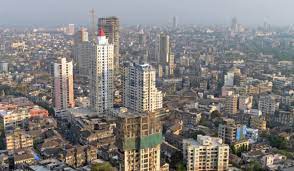
Market Yard is a marketplace in the city of Pune. It is known for wholesale of the vegetables, fruits & flowers.
Market Yard was shifted originally from ‘khalchi mandai’ from the peth area in Pune in order to expand the vegetable and fruit supply throughout the Pune City.
It was in 1980, when the then chief minister Sharad Pawar shifted the APMC market from mandai in Budhwar peth to the existing Market Yard at Gultekdi. This was carried out under the guidance and efforts of Late. Murlidhar Pandharinath Ghule, a trader in the old APMC market.

SHOPPING MALL
Phoenix Market City is a shopping mall developed by Phoenix Mills Limited, located in Pune, Maharashtra. It was opened in January 2011[1] and is one of the largest malls in India, with a retail area of 1.19 million square feet.[2] It is located in the Vimannagar area of Pune.[3]
Phoenix Market City has four floors of retail space and several features such as a retail zone, a food court with fine dining restaurants and quick service restaurants and a nine-screen PVR Cinemas.

MOVIE THREATERS
The Bal Gandharva Ranga Mandir is a drama theatre with an auditorium and exhibition hall located in Shivajinagar area of Pune, India. It is named after Marathi singer and stage actor, Bal Gandharva.

PARKs
Just 2 km from the Pune Railway Station lies this popular retreat for people of all ages. The gardens are situated next to Fitzgerald Bridge and take their name from the bund, or dam, on the Mula river.

HOSPITALS
Jehangir Hospital is a 350-bed hospital in Pune, Maharashtra, India. Sir Cowasji Jehangir and Lady Hirabai Jehangir founded the hospital on 6 February 1946.
The Jehangir Nursing Home was set by Sir Cowasji and Lady Hirabai who donated the land to start the hospital. The villa was called Ready Money Villa but they named it after their son Jehangir who passed away that year. The hospital began with 8 beds and Eduljee H Coyaji[3] was asked to helm Pune city’s first private hospital in May 1946.

pune LOCAL AREAS
Hadapsar
Baner
Pimpri
Dhanori
Wakad
Dhayari
NIBM
Salisbury Park
Bhosale Nagar
Aundh
Pashan
Kothrud
Shivajinagar
Deccan Gymkhana
Law College Road
Pisoli
Akurdi
Anand Nagar
Ashok Nagar
Aundh Road
Bajirao Road
Balaji Nagar
Bavdhan
Bhawani Peth
Bhekrai Nagar
Bhugaon
Bhukum
Boat Club Road
Bopodi
Budhwar Peth
Bund Garden Road
Camp
Chandan Nagar
Chandani Chowk
Dhankawadi
Erandwane
FC Road
Ganesh Nagar
Ganesh Peth
Ganeshkhind
Gokhale Nagar
Guru Nanak Nagar
Guruwar Peth
Hingne Khurd
Indira Nagar
Kalewadi
Kalyani Nagar
Karvenagar
Karve Road
Kasba peth
Katraj
Kondhwa
Kondhwa Budruk
Lavale
Lulla Nagar
Mahrashi Nagar
Market yard
Model colony
Mohammadwadi
Mukund Nagar
Mundhwa
Nagar Road
Narayan peth
Nasrapur
Padmavati
Parvati Darshan
Parvati Gaon
Paud Road
Fursungi
Pirangut
Prabhat Road
Pune Cantonment
Range Hills
Rasta Peth
Revenue Colony
Sadashiv peth
Sahakar Nagar
Salunke Vihar
Sangamvadi
Satara Road
Shaniwar Peth
Shastri Nagar
Shukrawar Peth
Sinhagad
Somwar Peth
Swargate
Thergaon
Tilak Road
Vadgaon Maval
Vadgaon Budruk
Wadgaon Sheri
Vidyanagar
Viman Nagar
Vishrant Wadi
Wagholi
Wakadewadi
Wanwadi
Warje
Yashvant Nagar
Yerwada
Loni Kalbhor
Shetphal Haveli
Chikhali
Talawade
Shivane
Kharadi
Dehu
Bhor
Chandkhed
Induri
Kamshet
Daund
Khadki
Junnar
Markal
Rajgurunagar
Khed
Koregaon Park
Dehu Road
Manchar
Sinhagad Road
Hinjewadi
Mulshi
Mahalunge
Alandi
Alandi Road
Balewadi
Bhosari
Chakan
Chinchwad
Dapodi
Dighi
Kasarwadi
Landewadi
Old Mumbai Pune Highway
Nigdi
Pimple Saudagar
Pradhikaran
Sanghavi
Undri
Lavasa
Mandai
J M Road
Talegaon Dabhade
Uday Baug
Walvekar Nagar
Ghorpadi
Sopan Baug
Keshav Nagar
Tingre Nagar
Magarpatta Road
Khadakwasla
MIT Collage Road
Ideal Colony
Manjri
Sukh Sagar Nagar
Ambegaon Budruk
Rahatani
Bibwewadi
BT Kawade Road
Ravet
Pashan Sus Road
Ramtekdi
Ingale Nagar
Sasane Nagar
Pimple Nilakh
Tathawade
Pimpri Chinchwad
Nasrapur Velha Road
Wai
Lohegaon
Yavat
Chourainagar
Malegaon
Kiwale
Taljai
Jambhul
Veerabhadra Nagar
Moshi
Shikrapur
Handewadi Road
NIBM Annexe
Moshi Pradhikaran
Sainath Nagar
Pawna Nagar
Panshet
Khed Shivapur
NIBM Road
Ranjangaon Karanjawane Road
Magarpatta
Baramati
Pune Nashik Highway
Kondhwa Saswad Road
Shreehans Nagar
Koregaon
Spine Road
Pune Sholapur Road
Jejuri
Shirwal
Kharadi Bypass Road
Pimple Gurav
Purandar
Senapati Bapat Road
Narhe
Gahunje
Mundhwa Road
Shirur
Marunji
Velhe
University Road
Mamurdi
Uruli Kanchan
Uruli Devachi
Handewadi
Rambaug Colony
Kanhur Mesai
Maan
Kondanpur
Saswad
Nande
Kondhawe Dhawade
Wadebolai
Mumbai Pune Expressway
Uttam Nagar
Punawale
Dattavadi
MG Road
Ranjangaon
Sanaswadi
Mangalwar Peth
Kirkatwadi
Fatima Nagar
Raviwar Peth
Lonikand
NDA Road
Indapur
Gultekdi
Sus
Sangvi
Vithalwadi
Shirgaon
Wadaki
Narayangaon
Theur
Wadegaon
Nerhe
Kanhe
Bhusari Colony
Padvi
Nanded
Charholi Budruk
Katraj Kondhwa Road
Ganga Dham
Khamundi
Dhanore
Talegaon Dhamdhere
Kolhewadi
Sarola
Shewalwadi
Pingori
Sanjay Park
Paud
Kavade Mala
Shankar shet road
Ashtapur
Baner Pashan Link Road
Agarkar Nagar
Kondhapuri
Mahatma Phule Peth
Bakori
Kalas
Ketkawale
Walhe
Chimbali
Alephata
Bope
Chande
Lokamanya Nagar
Yewalewadi
Kelawade
Hinjawadi Phase I
Mahalunge Ingale
Ambarwet
Rihe
Wadgaon Budruk
Kasar Amboli
Kasarsai
Bhilarewadi
Kesnand
Ghotawade
Somatne Phata
Nanekarwadi
Awhalwadi
Gudhe
Narayanpur
Malshiras
Donaje
Alandi-Markal Road
Nimgaon Mhalungi
Ambavane
Valane
Uravade
Mohari BK
Bhaginghar
Tambhad
Sonde Karla
Kodawadi
Misalwadi
Koregaon Bhima
Dive
Lohagad
Medankarwadi
Wadki
Kolvan
Karmoli
Pargaon
Dhangarwadi
Parner Pune Highway
Bahul
Bopgaon
Morgaon
Kolwadi
Bhoirwadi
Sate
Bopkhel
Vadhu Budruk
Shindaone
Pimpalgaon Tarf Khed
Boripardhi
Somatane
Holewadi
Shiroli
Kurkumbh
Jalochi
Charholi Khurd
Nighoje
Baner Bypass Highway
Otur
Ambegaon Khurd
Moi
Walati
Jambhulwadi
Tukai Darshan
Darumbre
Karanja Vihire
Parvati Paytha
Vadgaon Sheri
Mangadewadi
Kunjirwadi
Kadus
Sadar Bazaar
Aambethan
Uksan
Dahiwadi
Haveli
Talegaon chakan Road
Baner Annexe
Talegaon Varale Road